
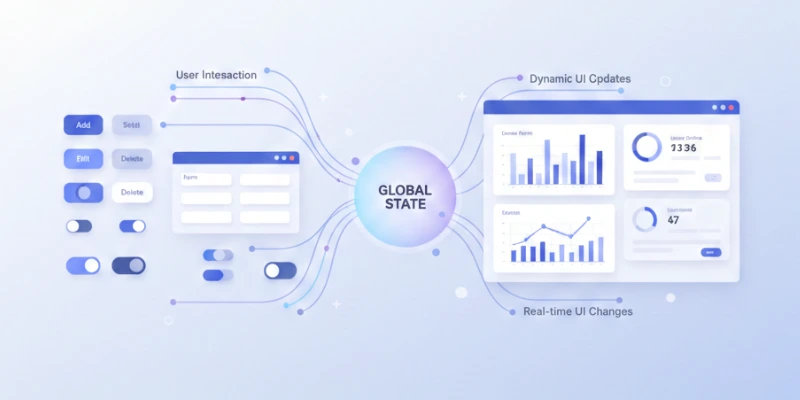
State is one of the most important ideas in frontend development. It defines how an application behaves at any given moment. When individuals engage with a website, they expect the interface to respond instantly and correctly. State is the mechanism that makes this possible. Without state, modern interactive applications would not exist. Enrolling in the Full Stack Developer Course in Trivandrum at FITA Academy can help you master concepts like state and build interactive web applications.
What State Means in Frontend Development
In frontend applications, state represents data that can change over time. This data directly affects what users see on the screen. Examples include form input values, button clicks, login status, and selected items. Whenever state changes, the user interface should reflect that change clearly and consistently.
State is different from static content because it is dynamic. Static content remains the same unless the page reloads. State allows applications to update parts of the interface without refreshing the entire page. This is a key reason why modern web applications feel fast and responsive.
Why State is Essential for User Experience
Good state management improves user experience significantly. When state is handled correctly, users see immediate feedback for their actions. A button shows a loading indicator, a form displays validation messages, and a dashboard updates with fresh data. These small interactions build trust and usability. Learning how to manage state effectively is easier when you join the Full Stack Developer Course in Kochi, where you can gain practical skills to build dynamic and responsive web applications.
Poor state handling often leads to confusing interfaces. Users may see outdated information or unexpected behavior. This can cause frustration and reduce engagement. Understanding state helps developers create interfaces that feel predictable and smooth.
Local State and Global State Explained
Frontend state can be categorized into local state and global state. Local state belongs to a specific part of the interface. It usually affects only one component or feature. Examples include toggling a dropdown or typing into an input field.
Global state is shared across multiple parts of the application. It often includes user authentication status, theme preferences, or shared data from a server. Managing global state requires careful planning to avoid conflicts and unnecessary updates.
How State Changes Over Time
State changes are usually triggered by user actions or external events. Clicking a button, submitting a form, or receiving data from an API can all cause state updates. Each change should be intentional and easy to trace. To learn how to manage state effectively and build robust web applications, consider enrolling in the Full Stack Developer Course in Chandigarh, where you can gain hands-on experience with modern frontend and backend concepts.
Clear state transitions make applications easier to debug and maintain. When developers understand how and why state changes, they can prevent unexpected bugs. Predictable state flow also improves application reliability.
Common Challenges in State Management
As applications grow, managing state becomes more complex. Multiple components may depend on the same data. Without a clear structure, state can become hard to track. This often leads to duplicated data and inconsistent behavior.
Another challenge is updating state efficiently. Unnecessary updates can slow down the interface. Careful design helps ensure that only the required parts of the application re-render when state changes.
Building a Strong Foundation with State
Understanding state in frontend applications is a fundamental skill for developers. It influences performance, usability, and maintainability. A strong grasp of state concepts allows developers to build scalable and interactive interfaces.
By learning how state works and how it flows through an application, developers can make better design decisions. This knowledge forms the foundation for mastering modern frontend frameworks and building high quality user experiences. Joining the Full Stack Developer Course in Jaipur can help you strengthen these skills and gain practical experience in creating dynamic and responsive web applications.
Also check: Version Control in Full Stack Development: Why It Matters